
Journal
What not to lock in a garden shed
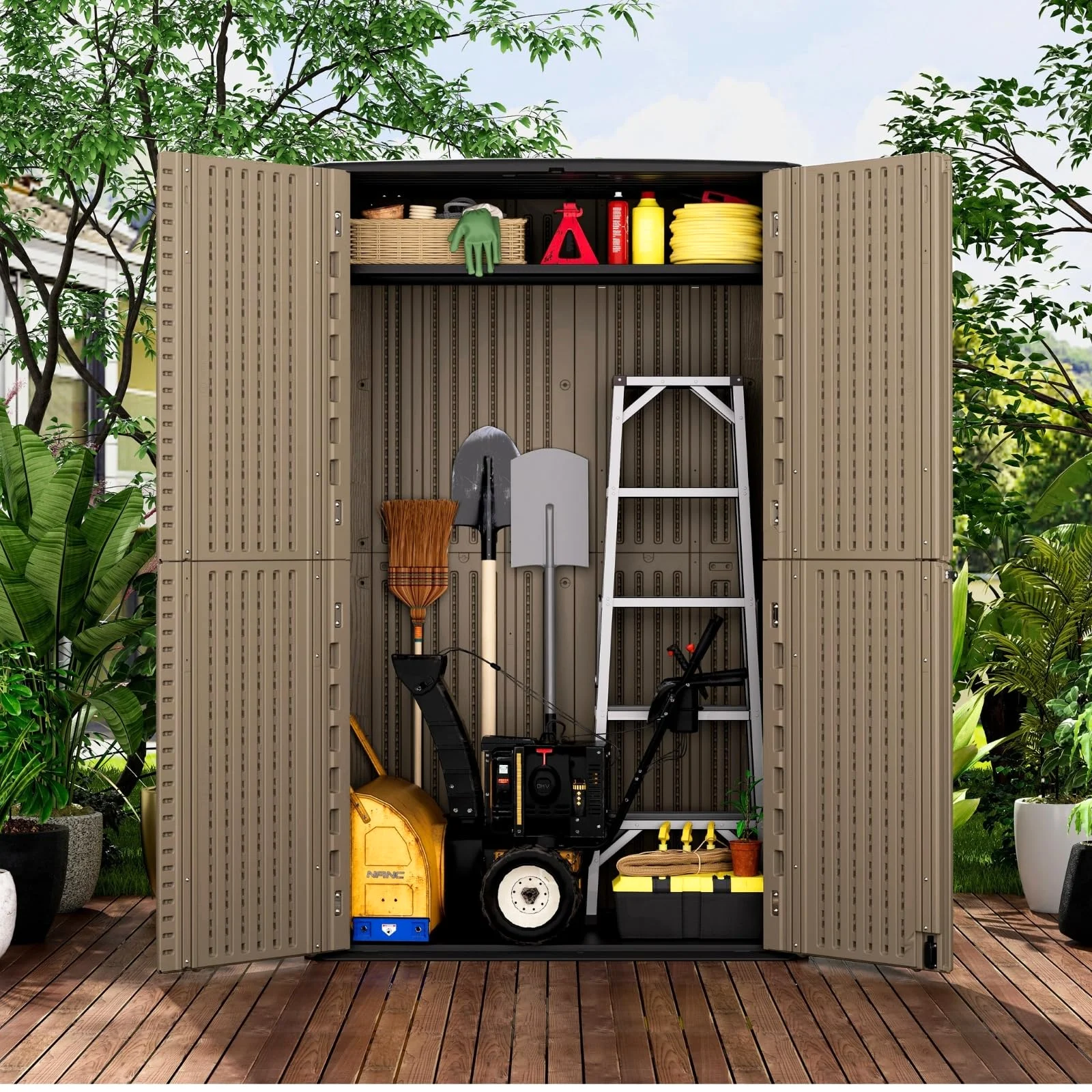
This is general information about storing household and garden products, not fire-safety advice for your property. Follow the instructions on the container and your local fire code.
The July mistake: gas can beside the mower
It is midsummer and you have just moved everything out of the garage into a neat shed. The mower sits ready and the red gas can ends up beside it, behind a locked door. That is the scene almost everyone recognizes. A padlock on a latch will stop the door from blowing open and it will keep children out of what is inside. It is not a safe.
Our storage boxes are resin or double-wall HDPE and they come with a floor pan and a latch that takes a padlock. They are not fire rated and they are not ventilated beyond small vents at the eaves on the taller sizes. That combination matters when the contents include fuel, pressurized cylinders or flammable chemicals. A locked door, by itself, does not change how vapors behave, how heat travels, or how a spark finds fuel.
You likely moved those items for convenience. We understand that impulse. A shed can feel like the sensible place for tools and cans. Still, the simple fact is that not every item belongs behind a locked resin door. What follows sorts the common mistakes by what the published guidance actually says from the bodies that publish safety standards. Local rule decides whether any of those rules apply where you live, and when in doubt you should check with the authority that enforces fire code in your area.
Fuel, and why a locked box is the worst place for it
Fuel is the single most common impulse item people tuck into a garden shed. The National Fire Protection Association keeps data on ignitable liquids and on the hazards they create. Between 2014 and 2018 local fire departments reported an average of 970 structure fires a year that started with ignitable liquids. Those incidents caused three deaths, 57 injuries and 180 million dollars of property damage annually. NFPA also publishes a standard, NFPA 30, that sets baseline rules on approved containers and maximum quantities for liquids including gasoline and diesel.
Those rules are about containers and quantities, not blanket bans on sheds. They tell you what kind of container is approved and how much you may legally store before you need to take different precautions. What a resin or double-wall HDPE box does not do is stop a liquid from vaporizing or prevent vapors from accumulating. A padlock will keep the door closed, but it will not keep a spark from finding vapors if the container leaks or if vapors enter another part of the building.
If you plan to store fuel, follow the container guidance in NFPA 30 and consult your local fire authority about allowable quantities. Their rules will determine what you can legally and safely keep on your property. Keep fuel in approved portable containers and away from ignition sources. That remains the practical, responsible course.
Propane cylinders belong outside, upright and in the open air
Propane behaves differently from liquid gasoline. The National Fire Protection Association addresses liquefied petroleum gas in NFPA 58. That standard limits a building not frequented by the public to 300 pounds of propane. A building frequented by the public is limited to cylinders of one pound and 200 pounds in total, according to the same guidance. Those figures are baseline numbers and local rule decides how they are enforced where you live.
Beyond quantity limits, a simple practical rule applies to cylinders. A cylinder belongs outside, upright, in the open air and shaded, not in a sealed box. Storing a propane cylinder in a closed resin or double-wall HDPE shed creates a hazard because leaks collect and can travel into confined spaces. The cylinder valve and regulator are designed to be outdoors where gas disperses quickly. What looks tidy behind a locked door can become dangerous if a leak happens and vapors concentrate.
If you use propane for a grill, heater or other appliance, keep spare cylinders outside. Store them upright on a level surface and protected from direct sun and extreme heat. Check local regulations and your fire authority for specific limits and clearances. Those offices are the ones that set and enforce the rules for your neighborhood.
Lawn and garden chemicals: follow the EPA wording
The U.S. Environmental Protection Agency gives clear, practical directions for pesticides and similar products. The guidance says to keep pesticides in their original labelled containers, in a locked and well ventilated cabinet or garden shed, never in or near cabinets with food, animal feed or medical supplies, and keep flammable liquids away from an ignition source such as a furnace, a car, a grill or a lawn mower. The EPA also advises not to stockpile and to buy only what you will use soon.
Read those lines again if your usual habit is to stand the weed killer next to the mower. The instruction to keep flammable liquids away from an ignition source argues against placing them beside equipment that runs on gasoline or has a hot engine. The original labelled container matters because it carries mixing instructions, first aid measures and emergency numbers. That information is what responders and you will rely on if something goes wrong.
A locked shed can meet the EPA's suggestion for secure storage, but ventilation and separation from ignition sources remain important. Our boxes offer a floor pan and eave vents on taller models, but they are not a substitute for a ventilated, purpose built cabinet if local rules or the product label call for that. When in doubt start with the container label. If the label or local guidance points to different storage, follow that advice.
Items that are ruined, not dangerous
Not everything in a yard shed creates a safety hazard, but many things can be ruined if stored there. Items that freeze and split will not survive a hard winter in a poorly insulated shed. Plastic watering cans with some water in them are a common casualty. That partial water freezes, expands and splits the container. The same physics can crack sealed plastic plant food tubs and spray bottles.
Paper and card will absorb moisture and go moldy. Seed stocks lose viability if they sit damp or warm for long periods. Batteries can corrode, leak acid and lose capacity when exposed to temperature swings. Those leaks will ruin other items stored nearby and can be unpleasant to clean. Small electronics and photographic film do not fare well either.
Think of the shed as a place that protects from rain and sun, not as a climate controlled room. If an item is sensitive to freezing, moisture, or wide temperature swings, the shed may not be the right home. For many gardeners the practical answer is to bring vulnerable items indoors before severe cold, to store batteries in a stable spot, and to empty and dry watering cans and sprayers before the freeze arrives. That approach saves replacements and avoids messy damage.
What a shed is genuinely for
A long list of ordinary things is better off behind that door. Trash cans and recycling bins stay drier behind a door. Cushions and pool kit benefit from a dry, shaded space when not in use. Garden tools and a mower are natural residents of a utility shed. Firewood kept dry on a raised platform will burn cleaner and ignite more predictably. Bikes find a secure spot and lose less chain rust if stored under cover.
Pool chemicals and some cleaning products do require attention to labels. Where a label or local rule demands a ventilated cabinet or specific separation from food or medical supplies, follow that. For everything else the practical checklist is simple. Keep heavy items low on the floor pan. Store sharp tools out of reach of children or in locked boxes. Put oily or messy items in a tray or on a shelf that is easy to clean. A padlock on a latch keeps people out and the door shut. It does not make the box fire rated.
We design and sell boxes to protect gear from weather and curious hands. Use that protection for items that benefit from being dry, shaded and secure, and move the hazards that require specialist storage to the right place.
If you are unsure, check the label and ask
When a product looks questionable the first place to look is the container label. Manufacturers provide storage and disposal instructions for a reason. That label will often tell you whether a chemical needs ventilation, whether it must be kept away from children or food, and whether a specific container is required. If the label is unclear, contact the manufacturer or check official guidance from the body that publishes standards for that product.
If rules might apply, consult your local fire authority. They enforce fire code and they will tell you what quantities and storage methods are allowed at your address. We can point to NFPA standards and the EPA guidance, but local rule decides what is permitted where you live. For product safety itself, check the U.S. Consumer Product Safety Commission database. It is a public, searchable resource for recalls and safety warnings by hazard and product category. If you worry a particular item is unsafe, that database is the next practical step.
Finally, remember the limited role of a padlocked latch. It secures the door and keeps curious hands away. It does not stop vapors, it is not a safe, and it does not make an unvented plastic box fire rated. When in doubt read the label, then check with the authority that enforces code where you live, and look up recalls if the product is the concern. Those three steps will clear most questions and keep you safer in that July scene with the mower and the red gas can.
Every capacity mentioned above has a page with the outside measurements on it, and the guide compares the classes.